 Remembrance of things past is not necessarily the remembrance of things as they were. - Marcel Proust
Monday, November 29, 2010
Quote of the Week
Remembrance of things past is not necessarily the remembrance of things as they were. - Marcel Proust

Thursday, November 25, 2010
Turkey Day Review
For Thanksgiving dinner we would wait
Then we sat and ate and ate
Thankful we are to be gathered here
At this joyous time of year
Said Uncle Fred

Would you please pass the bread
When all was done
Someone said how about one
More piece of pumpkin pie
Wednesday, November 24, 2010
What's in a Name?
 |
| Photo Credit: Heather Ingram |
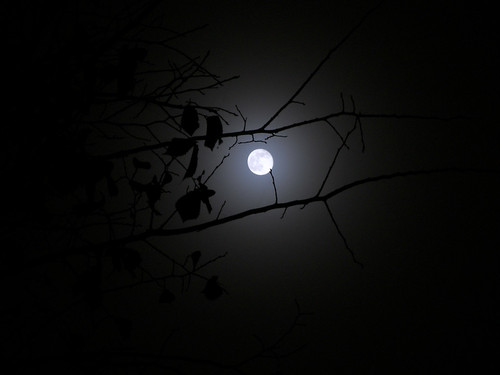
I never knew which was which, though, so I thought I'd find out and share that with you.
The Harvest Moon is the full moon nearest the Autumnal Equinox. Although it usually occurs in September, about every four years or so it falls in October, and the latest the Harvest Moon can occur is October 7. Most full moons rise around 50 minutes later each night, but the Harvest Moon is only 20-30 minutes later. This would allow the farmers more light to gather their harvest, hence the name, Harvest Moon. When the Harvest Moon falls on the Autumnal Equinox, it is called a Super Harvest Moon. This occurred this year, and was the first one since 1991.
The Hunter's Moon is the first full moon after the Harvest Moon. This full moon is named such because it's light allows hunters to track their prey. In the days of old, this was necessary to put aside food for winter when the snows came, and the birds and animals were less plentiful.
November's moon is often called the Beaver Moon because this was the time to set beaver traps, ensuring a good supply of furs for winter. Again, this dates back to the days of trappers and mountain men.
December's moon is known by several names, the Cold Moon or the Long Night Moon. It is aptly named as Cold Moon for the winter's cold temperatures, and Long Night Moon for long stretch of darkness over the winter night. This moon is also visible for a long period of time each night. It's high trajectory is due to the fact it is opposite a low sun.
Full moons are always lovely to behold, and now we know a bit more about that big glowing orb that casts it's light upon our darkened earth. Talon, a fellow blogger, captured the beauty of the full moon this past weekend.
Monday, November 22, 2010
Quote of the Week

-Ralph Waldo Emerson
Many times we think that failing is the worst thing that can happen, when in truth, failing to get up is much worse.
Many times we think that failing is the worst thing that can happen, when in truth, failing to get up is much worse.
Wednesday, November 17, 2010
Under the Weather?
 |
| Ever wonder where the expression "under the weather" came from? |
The phrase "under the weather" dates back to the 1800s. When sailors would become seasick, they would be sent below deck to get away from the weather, thus literally being "under the weather". Author Donald Grant Mitchell was the first to use this phrase in his 1850 book Reveries of a Bachelor, and it has since been used for everything from being "ill" or "indisposed" to "financially embarrassed" or "drunk".
Some state that the correct term is "under the weather bow". The weather bow is the side of the boat being hardest hit by the nasty weather.
Also there is the belief that the weather can affect one's health, so a sick person is deemed to be "under the weather". From this theory, it stands to reason that the weather can also influence a person's mood, rendering them under the weather as well. This is documented as SAD, or Seasonal Affective Disorder, which I touched on last fall in my post Just Another Monday.
We all know the steps to staying healthy during the cold and flu season, but here's a recap so we don't have say, "Sorry, I can't. I'm under the weather."
- Wash your hands frequently with soap and warm water, or use hand sanitizer when you can't wash.
- Do not touch your face - nose, eyes, mouth - that is the germ's way into your system.
- Keep your distance from those are already sick.
- In turn, if you do get sick, stay home away from others.
- And of course, cover your nose and mouth when you sneeze or cough.
Subscribe to:
Posts (Atom)